Friday, April 1, 2011

Manuscript Makeover by Elizabeth Lyon

I am working on my current manuscript which is a Christian historical romance which could better be called a prairie romance. I finished the novel last year. However, it occured to me that the ending was wrong, so I've been rewriting the ending before I begin my massive editing process. There are a few things that I struggle with like how to write a convincing fight scene, how to write good dialogue without using proper nouns on every tag, how to vary my sentence length, how to vary my sentence structure so every sentence doesn't begin with a proper noun, and how to write narration which incorporates the character and isn't written just from the author. I want to better my story and I have a long way to go, which makes the book Manuscript Makeover such a blessing for me at this time.

Manuscript Makeover, written by Elizabeth Lyon, the author of The Sell Your Novel Tool Kit, which has been reviewed previously on this blog, declares it possesses the revision techniques no fiction writer can afford to ignore. The book says it can help writers enhance style, clarify structure, deepen characterization, and clean up punctuation and syntax errors.The chapters are broken up into four parts. Part one is on recognizing and strengthening style. Part Two covers craft works and how to follow the tried and true story plots. Part three covers characterization. Part four covers marketing, query letters and synopses.

I loved the first chapter. I've heard at conferences and workshops people talking about style and voice and not really knowing what the people were talking about. I mean what is the difference between the two words. Ms. Lyon gives the defintion as, "Style is based on 'wordsmithing', choosing and tweaking words to create the desired effect and to fit a character and genre. Voice is the author's natural use of language to create authentic and original characters and unique story telling. More simply stated, style is an outcome of voice, more so than vice versa."

She also pointed out that ideas are like fireflies. Writers have about "fifteen seconds to capture an idea before it vanishes. They are like fireflies, difficult to catch if you don't act quickly." I am so guilty of thinking that I'll remember a great idea for my story and then when I finally get back to my story I can't remember what my thought was. I now have a notebook near where I can reach them in a quick moment of brillance.

Chapter two went into detail about the five types of sentence structure and sentence beginnings which I will cleave to as I edit. By chapter five, we cover story plots. My strength is characterization and my weakness is plotting, so this section of the book really inspired me. Ms. Lyon covers concepts taught by Joseph Campbell, Christopher Vogler, and Maureen Murdock. I love the way she takes these concepts and condenses the information into one totally understandable and readable chapter. In chapter seven, we cover motivation-reaction-units or elements of actions (inner and outer), reactions, emotions, reversals, subtext, and raising questions. The last section of this book cover characterization. I learned more about the topic and decided there are still some elements I can use to make my characterization even stronger.

I really enjoyed the structure of the book. Ms. Lyon gives examples of an element, lets say point-of-view. She writes the strength and weakness and gives examples of each point-of-view and then writes the advantages and disadvantages of using that element. Also each chapter has a compact checklist/summary of the chapter for quick and easy checking during revision.

All in all, I'd compare this book to having all of my Margie Lawson workshops and half of my shelf of craft writing books all balled up into one sixteen chapter book. Pretty neat, huh? I have decided that the information in this book will be invaluable to me during my editing process, so it's not getting shelved for awhile.

Happy Writing!

Sunday, March 6, 2011

Storyboarding with Shayla Black and Supplementing Your Fiction Habit with Janice Hanna Thompson

The "book to write by" that I wish to discuss this month is not a book at all, but two online courses that helped me in 2010. My money belt tightened. I left off conferences. So, last year, online courses became my main source of learning. A pitch for online instruction includes, learning at your own pace, in your home, in your pajamas, if desired. I've taken several of these, but I'd like to disucss two that helped me in particular areas of my writing.

The first one is "Supplementing Your Fiction Habit" with Janice Hanna Thompson. I would recommend this to any writer who wishes to write in more than one form, or who's shopping around a long manuscript but needs money, now. I love writing long fiction, but I also love short stories and devotions, so I found this course helpful. Ms. Thompson told us where to research markets, how to discard distractions and set up weekly goals for both long and short writing. She suggested thinking in terms of fifteen minutes to two hours instead of four to six hours for writing time. Different venues and other modes opened for me by studying what Ms. Thompson has done and continues to do though she is now multi-published in long fiction.

The second course which taught me this last year is "Storyboarding" with Shayla Black (aka Shelley Bradley). I utilized her method in writing the manuscript I have just finished. Shayla breaks storyboarding into easy-to-follow steps. Using storyboarding showed me where I needed to add focus, subplot or follow a thread of plot that by page one hundred, I might've forgetten. I used a simple poster board and four different colored post-it notes to storyboard, so a lot of expense isn't required. Ms. Black's lessons brought instant visualization to my manuscript. I highly recommend the course.

Online courses are a must-use for me. Though this year I do plan on a conference, I plan on scheduling certain courses in the comfort of my home.

Tuesday, February 8, 2011

Recently, my husband and I have allowed our teenage daughter to open a Facebook account. We are very protective parents. When she is allowed on the Internet to play on Facebook, we monitor her activity with our smart phones. We have certain rules for whom she may add as friends, and we speak to her about manners when communicating with people online. 

There is one item I just didn't think I needed to instruct her with, and that was grammar and punctuation. Let me say first, that I am not an expert on the subject, and I make mistakes from time to time. Honest mistakes and even careless mistakes I understand. However, I have discovered a truth which makes my skin crawl. My daughter and sometimes even my husband make grammar and punctuation mistakes on purpose! At first, I thought it was merely to irritate me. I'm kinda an obsessive-compulsive person anyways, so to annoy me is great fun for them.

But this is what I've noticed. I check my daughter's status bar and see misspelled words. I speak to her about using a dictionary, so she will know that she wants to tell her entire friend list that she is watching the Superbowl and not the Superball. At the very least, ask me to spell it. She says to me, "Mom, please don't critique my status bar. People know what I'm saying."

I then check my husband's status bar and am horrified. He doesn't use captital letters to begin a sentence. If that wasn't bad enough, I discovered he doesn't use punctuation. My eyes blink and a little nervous tick begins twitching in my cheek. I ask him about his status bars and he says, "Why should I use proper punctuation? No one else does on Facebook. We all know what we're trying to say."

Here in Texas, we have had an unusual amount of snow days. This type of forced vacation has been the perfect time to place a dent in my to-be-read-pile. One book stood out to me above the others, and it was a small, hardback book with the title, Eats, Shoots and Leaves by Lynn Truss. My family asked what I was reading, and I told them it was a book about punctuation. Their noses scruntched up, followed by a look which said, "Mom, you're an alien!"

I particulary enjoyed the book. I felt that I was in good company with the author, even though she knows considerably more about the subject than I. This book is not a text book with mind numbing information. Instead, it is a book about the history of punctuation and also how to use it correctly. I have had stumbling blocks about certain punctuations. For instance, why are exclamation marks so wrong? Why can't I add...elipsis whenever I want? I love...elipsis. What is the deal with periods inside the quotation marks and periods outside the quotation marks? Which one is right? Questions like these will keep me up at night. So, this is why not only did I read the book but learned from the book.

I even enjoyed the panda joke at the beginning of the book. I would relate it to you now, but I'd probably mess up the punch line. Please get the book and read it for yourself. You won't regret.

I will end my post with a crowning star moment from a conversation between me and my son yesterday.

"Mom, did you know the word eat can be a fun word?"

"How is that?"

"You can take the 'e' in eat and place it behind the 't' and the word becomes ate. Then you can take the letter 'a' and place it behind the letter 'e' and the word becomes tea. That's so cool!"

All is not lost. We should just keep teaching, training, and keeping our standards up.

P.S. While looking for an image to include with this post, I found a couple of links you might enjoy.


Google link for worksheet which will help solidify the information in your brain: 


If the above link doesn't work, search "eats, shoots and leaves" and locate the google link.

Happy writing, Y'all!!!
Debra

Sunday, January 16, 2011

One of My Favorite Writing Blogs

Gail Gaymer Martin is one of my favorite places to go for information about writing. You can find her at http://writingright-martin.blogspot.com. She has written information about almost any topic regarding writing. Just three of those I noticed were Characterization, Deep POV, and Common Writing Errors. There were many more topics to chose from. She writes in an easy to understand style that clearly presents the topic.

I highly recommend that writers check her site and sign up for notices when she
posts a new topic.

Sunday, January 2, 2011

Recipes and Food from the Civil War by Jim Long

In October of 2010, I went on a trip with a group to Branson, Missouri. Between shows, we visited several gift shops. One of the items I purchased was a book called Recipes and Food from the Civil War by Jim Long. A few examples in the book are the instructions for Red Eye Gravy, Jerky, Dried Apples, Corn Pone, Fried Squirrel, and Rebel Stew.

Do you know what Leather Britches are? I was concerned that soldiers were forced to eat pieces of leather until I read the directions. Leather Britches are dried whole green beans.

There is a section called "Treatments for Horses" that would be key to anyone who relied on horses for transportation.

If you are interested in this book or several others such as Herbal Medicines of the Civil War, contact Jim Long at his website, www.LongCreekHerbs.com. or at Long Creek Herbs, P.O. Box 127, Blue Eye, Missouri 65611. He also has a gardening blog at jimlongsgarden.blogspot.com.

For now, I'm going to read Mary Ball Washington's recipe for Lafayette's Gingerbread, which was a popular during the Civil War period. I might even give it a try. I'm going to skip trying Pemmican though.

Sunday, December 5, 2010

Partnering for Greater Writing by Judy Vandiver and Babara Oden

Here on the--books to write by---blog, we try to give good advice on books, webpages, and other avenues in which to improve your writing knowledge and abilities. Recently, I purchased a book written by two newer authors, Judy Vandiver and Barbara Oden, called "Partnering for Greater Writing." This small book, though an easy-read, is chock-full of interesting ideas to turn your want-to into finished products.
These two ladies turn partnering into an art form. Though the team work includes writing this book together, the duo transforms separate avenues and interests in the world of writing into a bond for encouragement, accountability and guidance. Examples abound of day-by-day calendars and goal setting lists actually used to upgrade their endeavors.
Since we're all individuals in our approaches to anything, seeing how two different personalities and styles provide momentum and motivation for each other inspired me. I have three critique partners (Debra, Stephanie and Moonine who write on this blog with me), and we do read each other's work and encourage when one is down. However, reading this book showed me the importance of perhaps choosing one writer with whom I could share goals set and met each week so that I might take my writing to a higher level in 2011.
Thank you, Judy and Barbara for this well laid-out plan. I highly recommend the book if you're looking for a unique way to spur yourself into action and keep you sailing to new writing pursuits.

Thursday, November 4, 2010

Describing Your Setting

Like many of you, I have found myself in a place where I struggled with a specific aspect of writing. My first stumbling block was point-of-view, not the first-person, second-person, third-person part. I struggled with head-hopping. Then my next obstacle was learning plot. I'm a emotions-first writer. I can write goals, motivations, and conflicts with a heap of emotions all day, but by the end of my work day my characters have not moved in the story. I have grown as a writer by learning everything I can about my writing struggles. As of today, my new writing conflict is setting. I never thought much about it before meeting my mentor. But as she reads my work she diligently points out that she can not see where my characters are coming from and going to and what the environment is around them. To help me learn more about the subject of setting, I spent the summer learning more about the area I have set my novel in. I also took pictures and bought books along the way. 

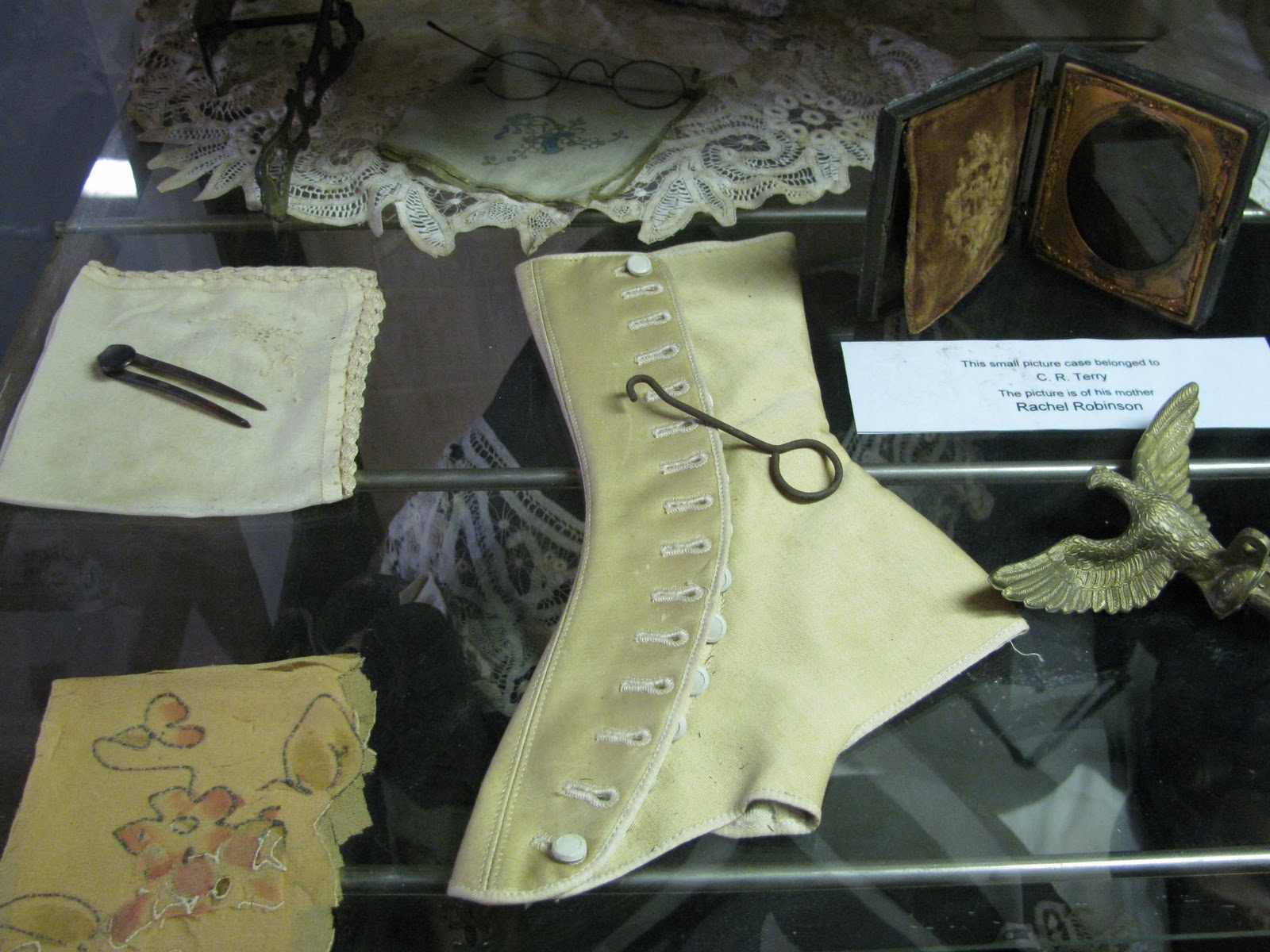
My first trip this summer was to the Wichita Mountains located in southern Oklahoma. I snapped many pictures of my kids and their friends at the Holy City, Mount Scott, and near a little lake (which I can't remember it's name). My second trip was on Father's Day. My husband drove me and our kids out to Lake Diversion. This is the exact location of my setting for my novel. I discovered an ancient map online and found the path of the old Wichita River which used to run near Lake Diversion. I also found that path of the river which still has a faint trail today. Using that faint trail, I discovered the town for my novel. I burned up the camera snapping pictures of native grasses, buttes, shelves, and farm lands. I discovered a part of the country I didn't know existed in these parts. Even though I snapped a lot of pictures of that area I will not post those because the images are too specific for what I want to accomplish with this blog post. My last trip was to Fort Worth and Decatur. In Fort Worth, we visited the Log Cabin http://www.logcabinvillage.org/  and saw a-hands-on 19th century village. We also visited Thistle Hill, but they wouldn't let me take pictures. In Decatur, we visited a 19th century museum (which used to be a Christian college in the 1800's). I took pictures of artifacts that were specifically from the Decatur area during the 19th century. I thought I'd share with y'all some of my findings.


 I can't remember this lake's name. But I thought the landscape was beautiful. I love the boulders and the tall grass against the backdrop of the lake and hill.


We are visiting the Holy City at the Wichita Mountains. This is the inside of the chapel. To this day they still hold services and wedding ceremonies inside the chapel. The art work on the ceiling is breathtaking. During the Easter holidays, they hold a Passion Service during sunrise.


Prairie dogs populate the Wichita Mountains. Though contact with the animals is strongly discouraged, I do have a photo of my son playing with a baby prairie dog.


We are driving up Mount Scott. We are not to the top, yet. About half way up, I became mesmerized by this view and made my husband stop the vehicle.


We visited the Visitor's Center at the Wichita Mountains. They have a movie room where visitors can watch a documentary about how the refuge began. There are exhibits of native animals, grasses, and insects. They also have a souvenir shop where I bought this book. I was pleasantly surprised with this book because it has pictures of local prostitutes in it. (There is a prostitute in my novel. I almost described her like I see in the movies with a corset, shawl, and skirt. The prostitutes in this book were dressed modestly.)


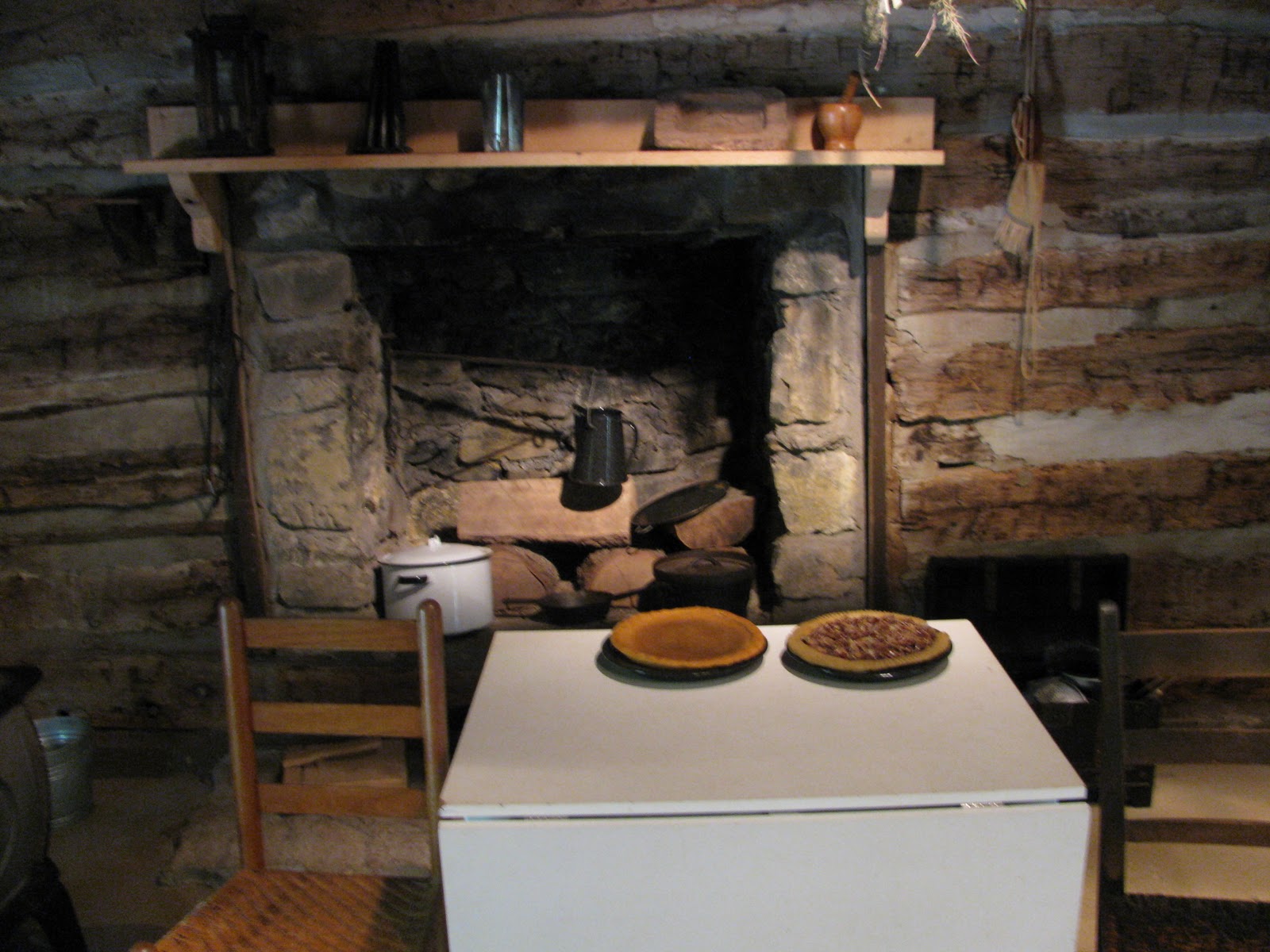
This photo is from the Log Cabin Village in Fort Worth, Texas. We see how early pioneers cooked on a hearth. The Village has many on hand volunteers who dress in 19th century costumes and work in the village, sewing, cooking, and performing certain crafts, such as candle making, spinning, weaving, and more. Two of these log cabins are Fort Worth cabins, but the other seven are historic Texas structures which were carefully dissembled and moved to the present site. All nine structures are actual mid-1800's cabins. The park has authentic log homes and artifacts, blacksmith shop, one-room schoolhouse, smokehouse, water powered gristmill, and a herb garden.


This log cabin only had one room, one bed, one table, and a cradle. I can't help but think how crowded families were in the home.


This is me grinding corn into meal. It was hard. I can't imagine how long it must've taken the average wife to grind enough corn into meal for the day's cornbread.
 I think I understand the old saying now, "Half past cornbread and goin' on biscuits." (Even though the process of baking bread took longer, grinding the wheat was easier and sometimes the flour could be bought locally.)


This is one of the volunteers who before we arrived was knitting. She taught me how to work the hand pump on the water spigot. I must remember for my novel to always prime the pump before attempting to get water.


I love this picture! I have a scene where my heroine is baking in the kitchen with her grandma. I have already used this image countless times. I also enjoyed showing my children the toaster hanging on the wall. Can you see it? It is hanging between the hearth and the iron skillet. The contraption already has two pieces of bread in it.


I could've watched this man work all day. I was fascinated with his skill working wood. While standing there, he made four legs to a table. They were beautifully crafted with curves and etching. Even though the machinery is all manual, the man worked very fast.


This is a one-room schoolhouse. The walls are white-washed. The black board was quite large. The seating didn't have desks. Lanterns hung from the ceiling for light. There was also a wash stand at the back of the room near a closet.


 I bought these books from the Log Cabin Village Store. The store clerks were dressed in time period clothing. They also had artifacts and old-fashioned candy in the store. In Bowie, Texas at a antique store/tea room called, Nostalgia...I bought real cakes of lye soap. The owners make it often to sell. If you drop by you have to try an ice cream soda  from their old-timey soda fountain. http://nostalgiainbowietx.com/antiquestore.htm


I found some very useful information in this book, such as why mothers dressed their toddler sons in dresses. Did you ever want to know why? The book says 19th century mothers didn't have diapers so to keep pants from soiling they put the boys in dresses until they were properly potty-trained.

I also discovered there were a lot of superstitions back in the day. Have you ever lost something and couldn't find it? The book has your remedy...The person who has lost the object SPITS into his right hand and hits the spittle with his left forefinger. The spittle will splatter in the direction of the lost object...Happy hunting, y'all!


This books shows how mothers taught daughters to cook by memorizing rhymes. (Johnny Cake in Rhyme)  "Two cups Indian, one cup wheat; One cup good eggs that you can eat. One-half cup molasses too, One big spoon sugar added thereto: Salt and soda, each a small spoon. Mix up quickly and bake it soon." The book also has food insults, "He's as helpless as spilled beans on a dresser." And here's my favorite, remedy for being struck by lightening, "For a couple of hours shower in cold water. In case there is still no sign of life, add a cupful of salt and continue for another hour." Ha!!! Salt won't help the dead!!! LOL


This is a hearse located at the museum in Decatur. It boasts, "1886 Model Air-conditioned Front Seat" (Shameful to stay I stood there wondering if that was a joke!)


This is the top to a wedding dress. It is charcoal gray, almost black with matching brocade trim. The caption reads, "Top to My Mother's Wedding Dress. Emma P. Butterfield and William B. Towles were married in Sulphur Springs, Texas in 1892. The skirt for some reason got away from me." ~Ethel Towles Alvord, Texas


I have discovered when planning my book that I need to take some time and visited local places where my novel is set. Take lots of pictures and never trust my memory because I'm forgetful. Even though you don't want to fill up pages of setting, adding the right descriptive sentences will add detail for the reader to see your story more clearly. Happy Writing! ~Debra Calloway

Writing Tip of the Day


________________